
Dentures Little Elm
A Customizable Solution for Extensive Tooth Loss

A single missing tooth is already a serious issue on its own, but losing an entire arch can have a devastating impact on your ability to speak clearly and enjoy a varied diet. Fortunately, our team at Parklane Family Dentistry can replace all of your missing teeth at the same time with high-quality dentures in Little Elm that have been customized for your unique mouth. If you’re interested in getting dentures to reclaim a complete, confident smile, give us a call today.
Why Choose Parklane Family Dentistry for Dentures?
- Dental Implants Placed In-Office
- Prostheses Made Out of Natural-Looking Materials
- Modern Practice Known for Excellent Customer Service
Who is a Good Candidate for Dentures?

Dentures are typically recommended for those who are missing multiple teeth or a full arch of teeth. Our team can help you determine whether this tooth replacement option is right for you by carefully examining your smile and considering the specifics of your situation. Note that you might require treatment for gum disease and other oral health issues before you can move forward with the process of getting dentures.
Types of Dentures
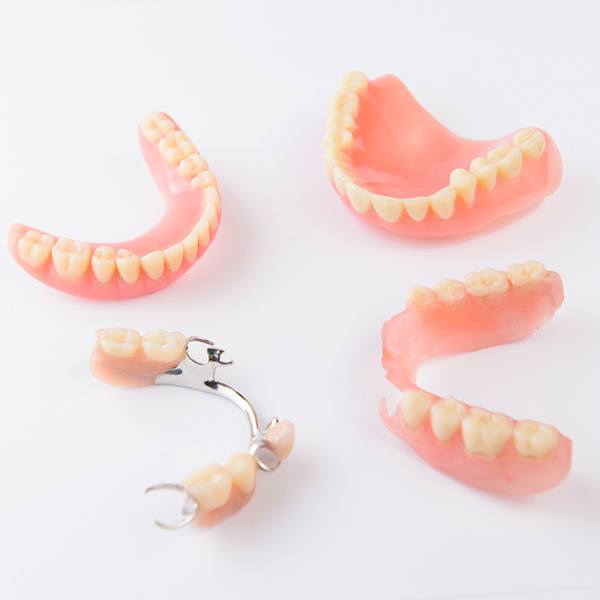
There are three main types of dentures available at our practice: traditional partial dentures, traditional full dentures, and implant dentures. Each of these tooth replacement options has its own advantages that make it worth considering. You can count on our team to help you figure out which kind of denture is right for you based on your needs.
Partial Dentures
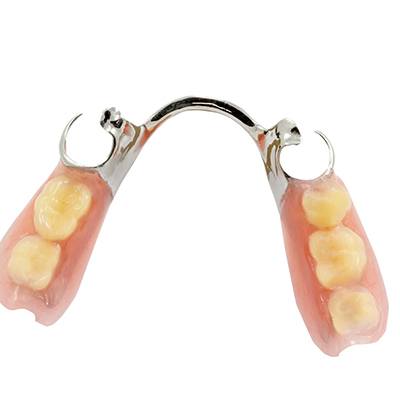
A partial denture is designed to replace teeth in different parts of a single arch. It fits into the gaps in your smile like a puzzle piece and relies on metal clasps to stay in place. You can take a partial denture out of your mouth in order to thoroughly clean it or the area under it.
Full Dentures
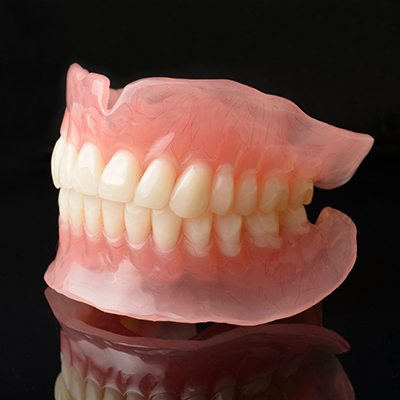
Full dentures make it possible to replace an entire arch of teeth with a single prosthesis. This type of denture sits on the gums and stays in place thanks to natural suction. Like partial dentures, you can remove full dentures at any time for cleaning purposes.
Implant Dentures
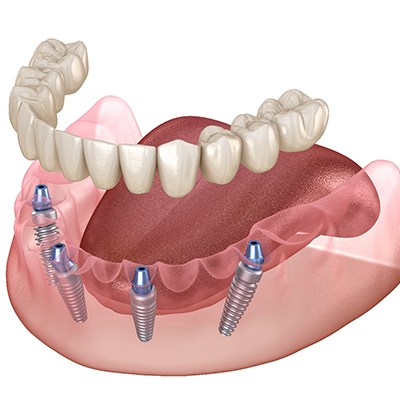
An implant denture is a partial or full denture that has been anchored to a number of dental implant posts that have been surgically placed in the jaw. The implant posts act as artificial tooth roots, giving your replacement teeth improved stability and chewing power. While implant dentures can be removable, they are often designed to stay in the mouth 24/7, which allows you to brush them as if they were natural teeth.
The Benefits of Dentures

There are several advantages to choosing dentures to replace all your missing teeth, such as:
- Improving your ability to eat a wider variety of foods.
- Enhancing your speech.
- Being easy to take care of.
- Preserving the overall shape of your face.
- Having a lifespan of 10 years or longer with the right maintenance.
Dentures FAQs
Do Dentures Break Easily?
While dentures are quite durable, they are not indestructible and will eventually need to be replaced. With excellent care, your appliance may be able to last between five and seven years, but it is possible for it to break due to falls, blows to the mouth, or being dropped when being removed or cleaned. Dentures can also break due to tiny defects such as notches or scratches in their base. Even if you take the best possible care of your dentures, they can still wear out over time due to the stress of repeated use.
What Should I Do if My Dentures Break?
The most serious damage dentures can sustain is “prosthesis fracture,” meaning that the appliance breaks in half. While this is more common among top dentures, it sometimes happens to bottom ones as well. The severity and nature of the damage to your denture will determine whether it can be repaired or will need replacement. In many cases, the team at Parklane Family Dentistry can repair chipped or cracked artificial teeth with composite resin or reline or adjust a denture base to help it fit better. However, a device that cannot be fixed will need to be replaced. Needing to replace your traditional dentures can be an excellent opportunity to consider implant dentures that provide maximum leverage and allow for superior appliance longevity.
Can Dentures Become Ill-Fitting?
Each set of dentures from our Little Elm office is completely customized for a comfortable fit and functional biting force, but these appliances may not fit as well after a few years due to wear and tear and the changing shape of the mouth. Since dentures do not restore the jaw stimulation the lost tooth provided, the bone structure that supported it will begin to atrophy and recede, which can change the way your appliance fits after a few years. Wearing dentures that don’t fit properly can lead to a host of oral health issues like gum irritation, bad breath, trouble eating and speaking, and bleeding. If your dentures are no longer fitting right, please bring them to our office in Little Elm so we can adjust or reline them as necessary. However, it will eventually be necessary to replace your appliance completely. You may be able to wear a poorly fitting denture more comfortably between adjustments by using an approved oral adhesive.
Am I Too Young to Get Dentures?
Tooth loss is rarely inevitable, but it is more common among older patients. About two thirds of adults between the ages of 40 and 64 have lost at least one tooth while only one third between 20 and 39 have suffered tooth loss. Thankfully, dentures can be a fantastic way for almost any adult who has lost at least one pearly white to restore their smile.